
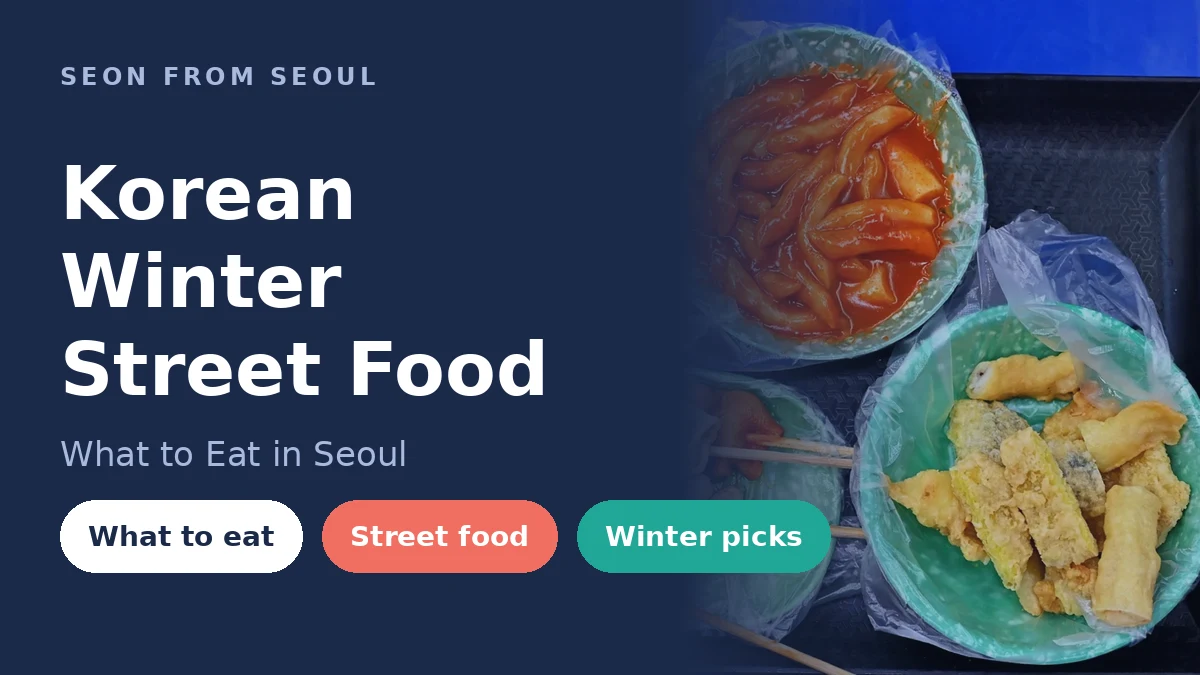
Quick Answer: In winter, Seoul’s best street food is tteokbokki with free fish cake soup, bungeoppang (fish-shaped bread), and roasted chestnuts. Neighborhood stalls charge about ₩1,000 per fish cake skewer and ₩2,000 to ₩3,000 for three bungeoppang. Myeongdong has the most variety but costs more.
Last updated: November 4, 2026.
When it gets cold in Seoul, little tents and carts pop up outside subway exits. You’ll see steam rising from a pot of fish cake soup and smell sweet red bean from a bungeoppang grill. That’s how you know winter is here.
I live in Seoul, and I often stop at the stall in front of my neighborhood in winter. Below are the snacks I actually buy, what I pay, and where to go if you want the full street food experience.
Korean Winter Street Food Prices at a Glance
| Food | Korean | What it is | Neighborhood price | Best for |
|---|---|---|---|---|
| Tteokbokki | 떡볶이 | Chewy rice cakes in sweet, spicy red sauce | ₩4,000–5,000 per serving | A cheap meal |
| Eomuk (fish cake) | 어묵 | Fish cake on a skewer, served with hot broth | About ₩1,000 per skewer | Warming up fast |
| Bungeoppang | 붕어빵 | Fish-shaped bread filled with red bean or custard | ₩2,000–3,000 for 3 | A snack to go |
| Gunbam | 군밤 | Roasted chestnuts in a paper bag | ₩5,000–6,000 per bag | Snacking while you walk |
| Hotteok | 호떡 | Pan-fried pancake with brown sugar syrup | ₩1,500–2,000 each | Something sweet |
| Gun-goguma | 군고구마 | Roasted sweet potato | Varies | A filling snack |
These are the prices I pay at stalls in my neighborhood in 2026. Prices change by area. Expect to pay more in tourist spots like Myeongdong.
Pro-Tip: Bungeoppang prices have jumped because red bean costs so much more now. Korean news calls it “bung-flation.” Some stalls in Seoul now charge ₩1,000 for a single fish bread. Three for ₩2,000 is still a fair deal.
1. Tteokbokki + Fish Cake Soup: A Meal, Not Just a Snack

This is my top pick on a cold day. A plate of tteokbokki and a couple of fish cake skewers is enough for lunch. It’s warm, spicy, and costs less than a coffee in some cafes.
The best part is the broth. The fish cake skewers sit in a big pot of hot soup. Grab a paper cup and a ladle, and help yourself. At most stalls, you can refill the broth as many times as you like. On a freezing day, nothing warms your hands faster.
How to order eomuk like a local
- Pick skewers straight from the pot and eat them standing at the stall.
- Keep your empty sticks. The owner counts them to work out what you owe.
- Pour broth into a paper cup from the ladle. Don’t drink straight from the pot ladle.
- Tell the owner you’re done, and pay for your skewers plus any tteokbokki.
Pro-Tip: Dip your twigim (fried snacks) into the tteokbokki sauce. It’s a classic combo, and most stalls sell them side by side.
2. Bungeoppang: The Snack You Take Home

Bungeoppang means “carp bread.” It’s a fish-shaped waffle-like bread with a filling inside. It’s the most famous Korean winter snack, and it travels well. I often buy a bag on my way home and eat them later.
The classic filling is sweet red bean (팥, pat). Custard cream (슈크림, shu cream) is the other common choice. Some stalls also sell flavors like pizza or sweet potato. Personally, I always go for the original red bean.
- Price: ₩2,000–3,000 for three at most neighborhood stalls.
- Season: Usually from late fall to early spring.
- Tip: Eat one right away while it’s crispy. The rest will soften in the bag.
3. Gunbam: Roasted Chestnuts
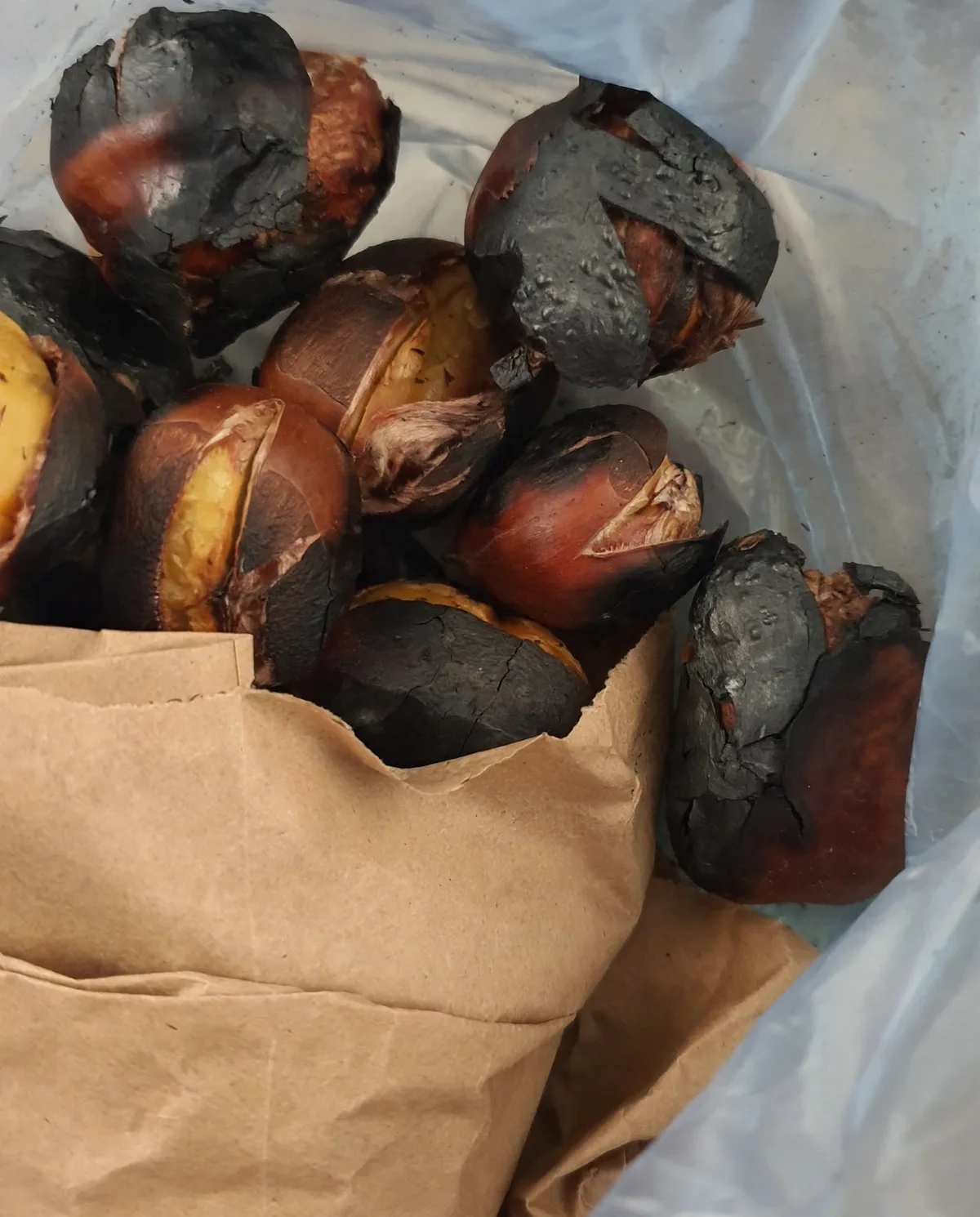
This one is simple: I just love them. Roasted chestnuts come hot in a paper bag, and they’re easy to eat while you walk. They’re sweet, nutty, and keep your hands warm. Look for a cart with a big round roaster and a pile of chestnuts on top.
More Winter Street Foods Worth Trying
- Hotteok (호떡): A pancake filled with brown sugar syrup. It’s very hot inside, so bite carefully. A plain one costs ₩1,500–2,000. Special versions cost ₩2,000–2,500, like the famous vegetable hotteok at Namdaemun Market or ones filled with seeds or cheese. In Busan, try the seed-filled version (ssiat hotteok). I cover it in my Busan 3-day itinerary.

- Gun-goguma (군고구마): Roasted sweet potatoes, often sold from a drum-shaped roaster.
- Gyeranppang (계란빵): A small, sweet bread with a whole egg baked on top.
- Ttangkong-ppang (땅콩빵): Small, peanut-shaped cakes with peanuts baked inside. They’re often sold by the bag, like bungeoppang.
- Hoppang (호빵): Steamed buns with red bean or pizza filling. You’ll find these in convenience store steamers all winter.
- Sundae and twigim (순대, 튀김): Korean blood sausage and fried snacks. Both usually sit next to the tteokbokki.
Where to Find Street Food in Seoul
You don’t need to go anywhere special. In winter, most neighborhoods have a stall or two near a subway exit or a bus stop. That’s where I go most often. But if you want lots of choices in one place, these are the spots.
| Area | Vibe | Prices | Best time |
|---|---|---|---|
| Myeongdong | Seoul’s street food capital. Dozens of stalls, lots of new trends | Highest. Many items ₩5,000+, some much more | Evening, busiest about 6–10 p.m. |
| Gwangjang Market | Old market, mung bean pancakes, mayak gimbap | Middle. Classic snacks about ₩3,000–6,000 | Lunch to early evening |
| Your neighborhood | Tents near subway exits, mostly locals | Lowest. The prices in my table above | After work, about 4–9 p.m. |
Myeongdong: The street food capital
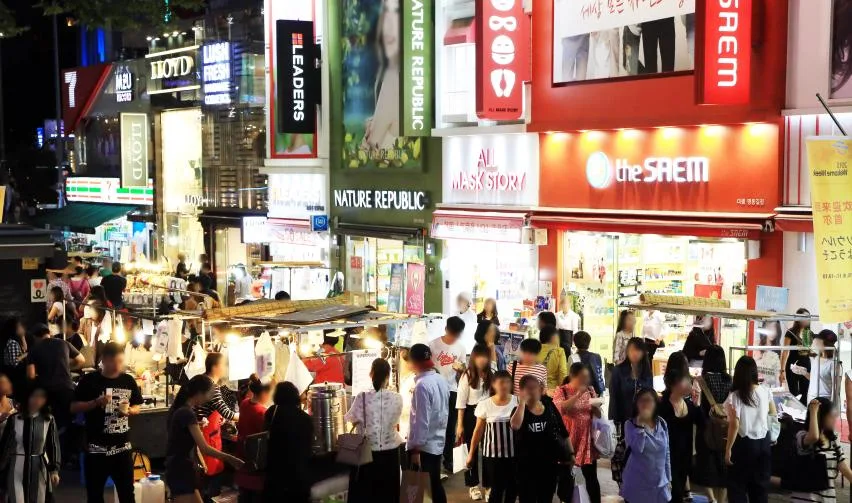

If you want to see every kind of Korean street food in one walk, go to Myeongdong. It’s the most famous street food area in Seoul, and it’s packed in the evening. You’ll find classics like tteokbokki next to trendy items like grilled lobster and cheese.
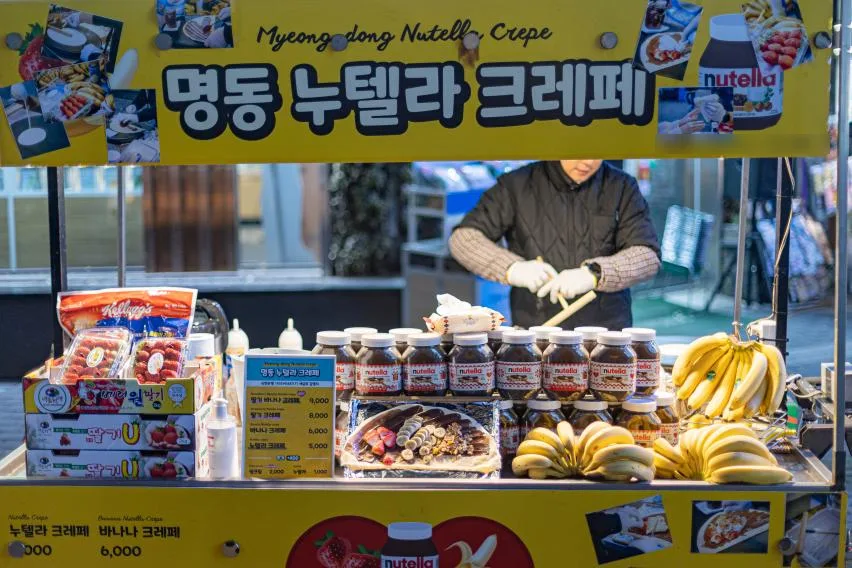
Myeongdong is great for variety, but it’s priced for tourists. Fancy items like lobster tails can cost ₩15,000 or more. My advice: try one or two trendy things in Myeongdong for fun, then eat the classics at a neighborhood stall for a fraction of the price.
Warning: Check the price before you order. Most Myeongdong stalls now post prices, but if you can’t see one, ask first. Point at the item and say “eolma-yeyo?” (How much is it?).
Gwangjang Market: For a sit-down street food meal
Gwangjang Market is one of Seoul’s oldest markets. It’s known for crispy mung bean pancakes (bindaetteok) and small mayak gimbap rolls. You sit on a bench at a counter, so it feels more like a meal. Watch out for “assorted plates” that bundle many items and cost a lot more than ordering one or two things.
Not sure what to order? A guide makes it easy. You can book a Gwangjang Market street food tour on Klook and try a bit of everything with a local.
How to Pay at Street Food Stalls
- Bring cash. Small neighborhood stalls often take cash only. Carry ₩1,000 and ₩5,000 bills.
- Bank transfer is common for locals, but it needs a Korean bank account, so it won’t help most visitors.
- Cards and WOWPASS work at many Myeongdong stalls and some market stalls. Don’t count on it at a tiny tent.
Self-Service Cash Boxes: Pay and Take Your Own Change
At many street stalls and pojangmacha (tent stalls), you may see a clear box or bowl of cash on the counter. Sometimes nobody takes your money. You check the price, drop your cash in the box, and take your own change. It works on trust.
My foreign friends love this when they see it for the first time. They say it would be impossible in their home countries. It’s a small thing, but it’s one of my favorite parts of Korean street food culture.
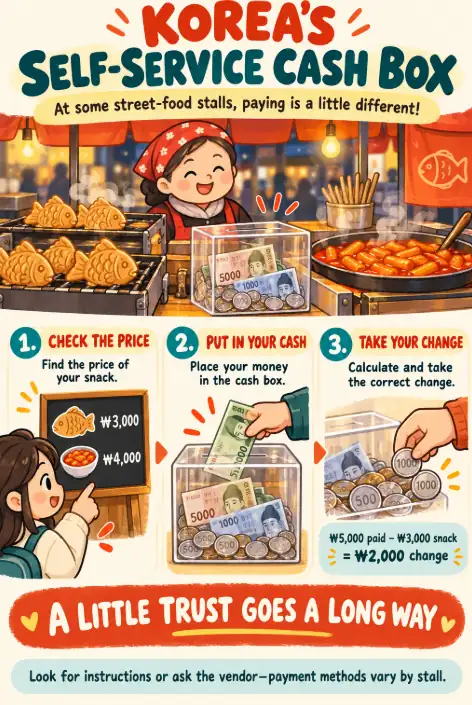
- Check the price. Look for a price board or sign at the stall.
- Put your cash in the box. Use the exact amount if you can.
- Take your change. Count it yourself. For example, pay ₩5,000 for a ₩3,000 snack and take ₩2,000 back.
Pro-Tip: Not every stall works this way. Some owners take money by hand, and some stalls take cards. If you’re not sure, watch what other customers do or ask the owner. Small bills and coins make this much easier.
A prepaid travel card helps when a stall does take cards. You can order a WOWPASS card on Klook before your trip. For cash, cards, and ATMs, see my full guide on how to pay in Korea.
Street Food Mistakes to Avoid
- Eating all your meals in Myeongdong. It’s fun, but it adds up fast. Classics are much cheaper elsewhere.
- Going too late. Neighborhood stalls often close early or sell out on cold nights. Many also skip rainy or snowy days.
- Biting into hotteok right away. The sugar syrup inside is extremely hot.
- Throwing away your fish cake sticks. The owner uses them to count what you ate.
- Not having data. Search “붕어빵” on Naver Map to find stalls near you. It works better than Google Maps in Korea.
New to eating out in Korea? My guide on how to order food in Korea covers kiosks, call bells, and tablets. Planning a cold-weather trip? Read what to wear in Seoul in November and December and my indoor winter day plans.
FAQ
What is the most popular Korean street food in winter?
Bungeoppang, fish-shaped bread filled with red bean, is the most iconic. Fish cake skewers with hot broth, hotteok, and roasted sweet potatoes and chestnuts are also very popular.
How much does street food cost in Seoul?
At neighborhood stalls in 2026, a fish cake skewer is about ₩1,000, three bungeoppang cost ₩2,000–3,000, and a serving of tteokbokki is ₩4,000–5,000. Myeongdong costs more, and trendy items can be ₩10,000 or higher.
Is fish cake soup really free at Korean street stalls?
Usually, yes. When you buy fish cake skewers, the hot broth is free, and you can refill your cup. Just pay for the skewers you eat.
Where is the best street food in Seoul?
Myeongdong has the most variety and is the city’s best-known street food area. For lower prices, try Gwangjang Market or a stall near any subway exit in a local neighborhood.
Sources
- Hankyung, bungeoppang prices at Seoul stalls (Nov 30, 2025): https://www.hankyung.com/article/2025112822467
- Korea Experience, Seoul street food prices 2026 (Feb 5, 2026): https://koreaexperience.com/blog/seoul-street-food-prices-2026
- Prices for fish cake, tteokbokki, bungeoppang, roasted chestnuts, and hotteok at neighborhood stalls are what I pay myself (Oct 2026).
Disclosure: This post contains affiliate links. If you book through them, I may earn a small commission at no extra cost to you.