

Quick Answer: Spend day 1 in west Busan (Gamcheon, Nampo, Jagalchi), day 2 in east Busan (Cheongsapo, Haeundae, Gwangalli), and day 3 on one extra: Haedong Yonggungsa or Oryukdo. Stay in Haeundae. The KTX from Seoul takes about 2.5 hours.
Prices, hours and bus routes change, so check Naver Map or the official site before you go.
Busan is not a mini Seoul. It is a port city with steep hills, long beaches and a lot of seafood. The trick is not to zigzag across it. I split the city into west and east, so you ride the subway less and see more.
This plan works for a first visit. It assumes you arrive by KTX. If you still need tickets, read my Seoul to Busan KTX guide. You can also book KTX tickets on Klook with an English screen and a foreign card.
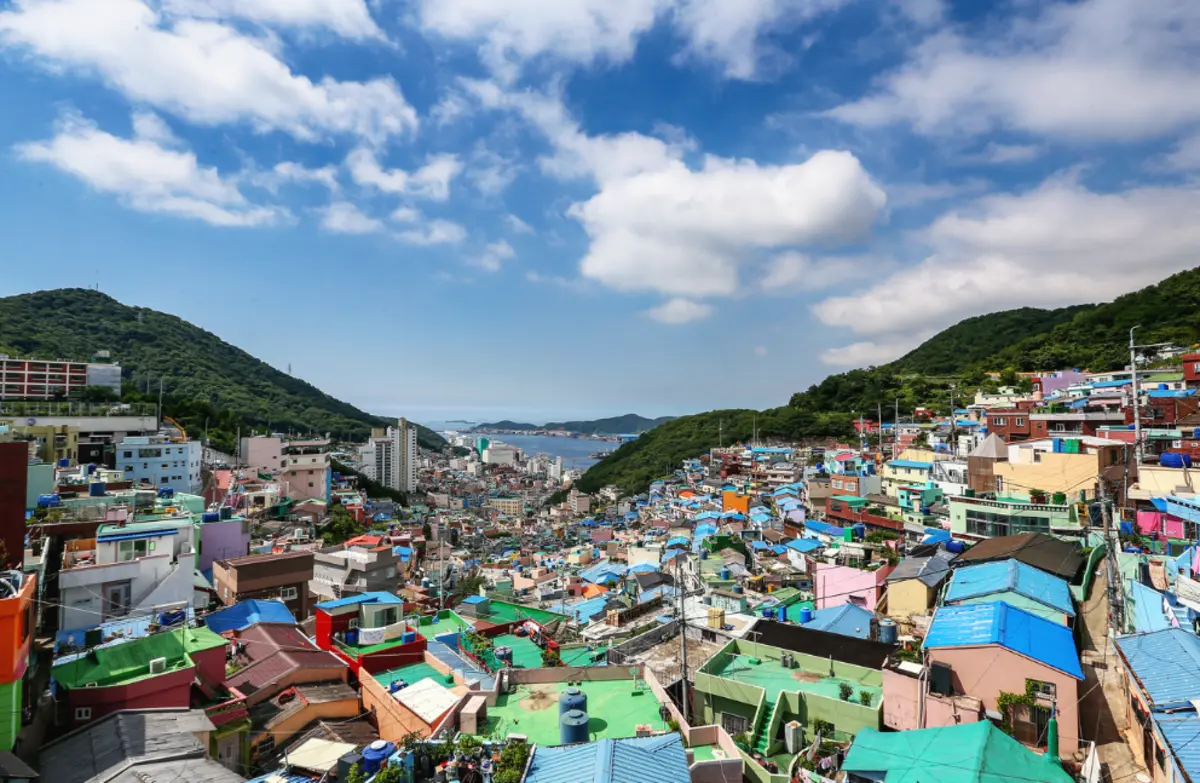
Gamcheon Culture Village. Photo: Busan Tourism Organization (KOGL Type 1)
In this guide 9 sections
Your 3 Days at a Glance
| Day | Area | Highlights | Evening |
|---|---|---|---|
| 1 | West Busan | Gamcheon Culture Village, BIFF Square, Gukje Market | Jagalchi (look first, eat smart) |
| 2 | East Busan | Cheongsapo, Haeundae Beach Train, Haeundae Beach | Gwangalli night view |
| 3 | Your choice | A: Haedong Yonggungsa. B: Jeonpo Cafe Street and Oryukdo Skywalk | Back to Busan Station or the airport |
Where to Stay: Pick Haeundae
I recommend Haeundae for most first-timers. A wide beach is right outside your hotel, and there is plenty to do in the evening. Seomyeon is a good second choice if you care more about subway access. Nampo is closest to day 1, but it is quiet at night.
| Area | Best for | Downside |
|---|---|---|
| Haeundae | Beach, views, a first trip | Far from west Busan, about an hour by subway |
| Seomyeon | Central location, transit hub | Less scenic |
| Nampo | Markets and old Busan | Few evening options |
Not sure how to pick a neighborhood? My where to stay in Seoul guide uses the same logic.
Day 1: West Busan (Gamcheon, Nampo, Jagalchi)
Route: Busan Station or the airport, then Gamcheon Culture Village in the daytime, then BIFF Square and Gukje Market on foot, then Jagalchi Market in the evening.
Gamcheon Culture Village: Start Here
Gamcheon is a hillside village of pastel houses and narrow stairs. It has a lot of slopes and steps, so it drains your legs. Go first, while you still have energy.
Pro-Tip: Wear sneakers, not sandals. Plan for stairs, even on the “easy” route.
How to get there from Busan Station:
| Option | Time | Notes |
|---|---|---|
| Bus 87 | About 33 minutes | No transfer. Get off at “Yangseong Supermarket” (양성슈퍼). |
| Subway + village bus | About 30 minutes | Line 1 to Toseong Station, Exit 6. Then village bus Saha 1-1, Seogu 2 or Seogu 2-2 to the entrance area. |
| Taxi | About 15 minutes | Roughly ₩7,000–8,000. The easiest option for a group of three on the steep road. |
Take the taxi if you travel with kids or heavy bags. Take the bus if you want to save money.
BIFF Square and Gukje Market
Nampo-dong is a short walk from Jagalchi, so you can see both in one stroll.
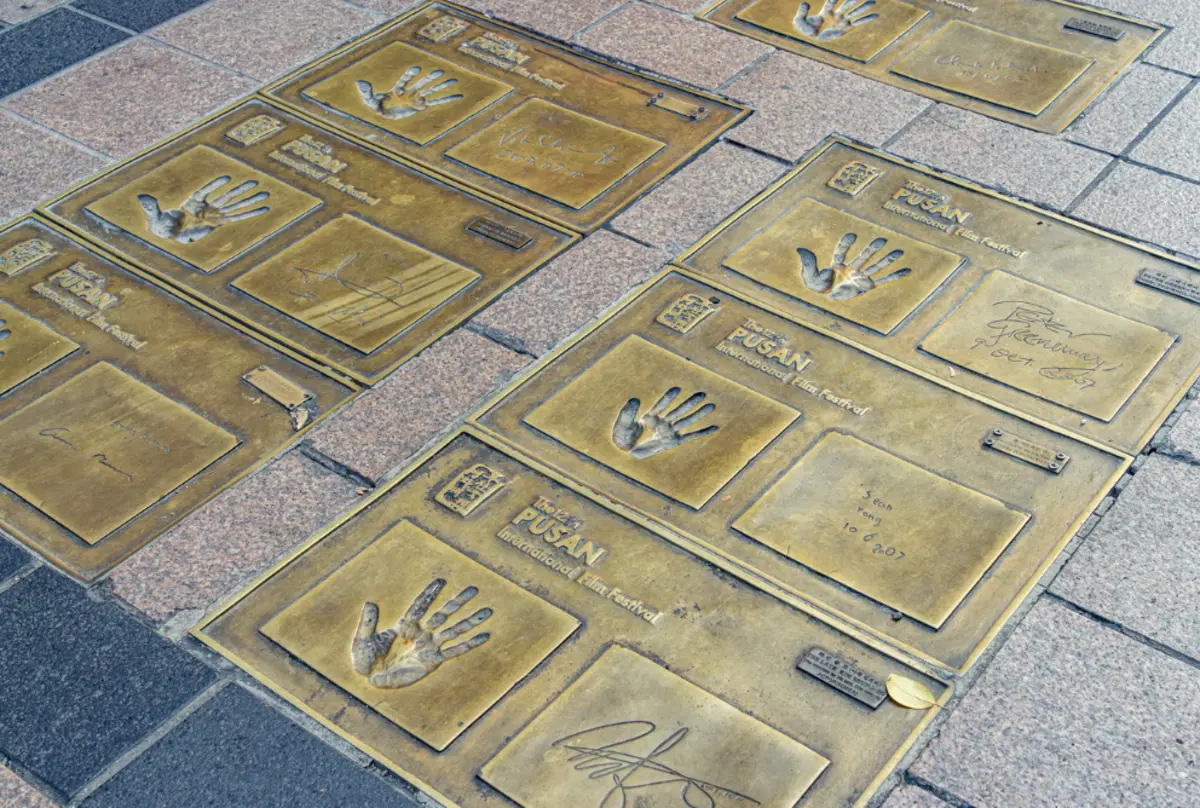
Handprint plaques at BIFF Square. Photo: Busan Tourism Organization (KOGL Type 1)
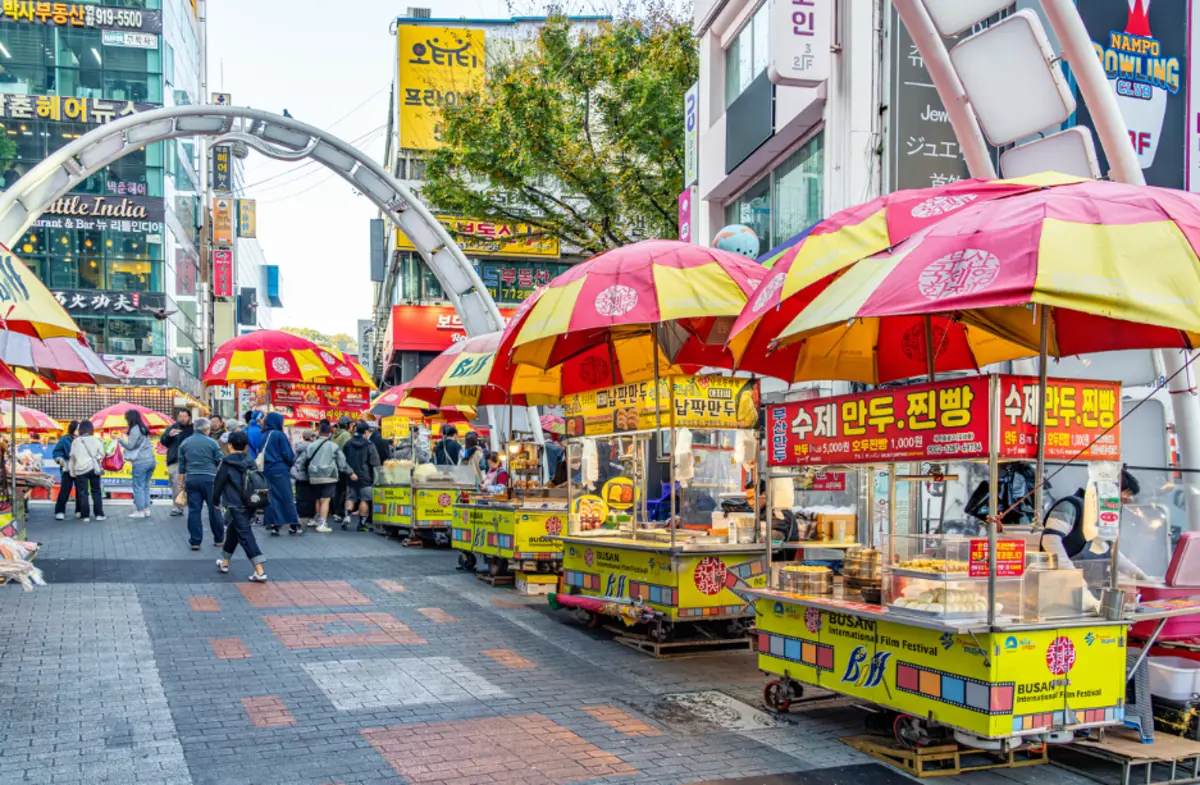
BIFF Square has handprints of film stars from the Busan International Film Festival. Gukje Market is next door, with old-school shops and side streets.
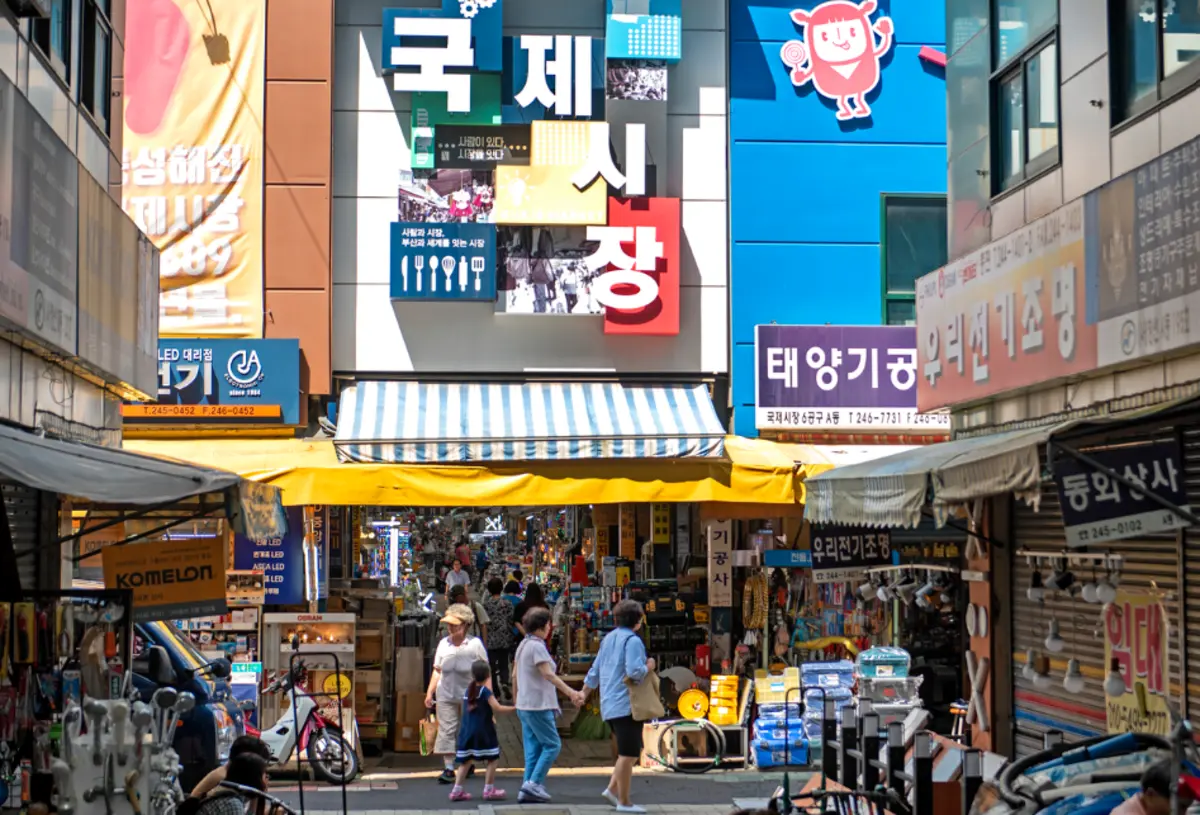
Gukje Market. Photo: Busan Tourism Organization (KOGL Type 1)
Try the ssiat hotteok, a sweet pancake stuffed with seeds and nuts.
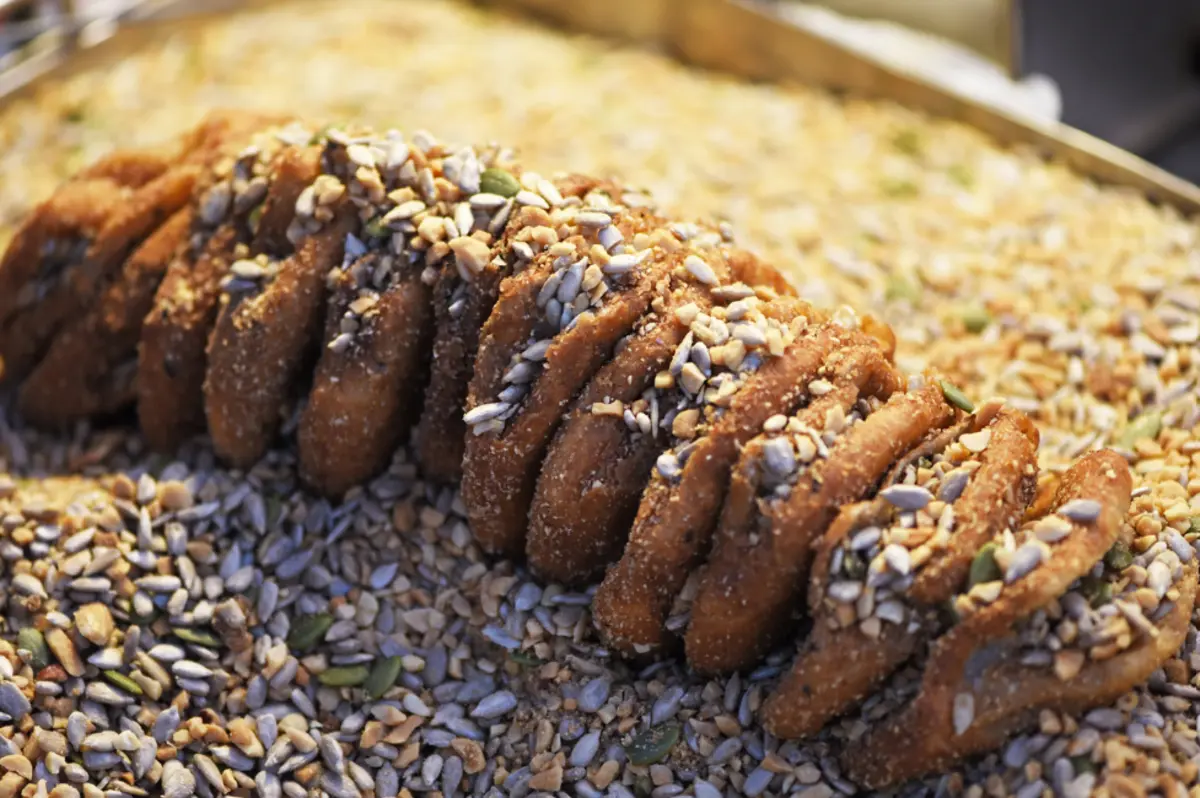
Ssiat hotteok. Photo: Busan Tourism Organization (KOGL Type 1)
Jagalchi Market: Look First, Then Eat Smart
Jagalchi is Korea’s biggest seafood market. It is worth seeing, especially around sunset.
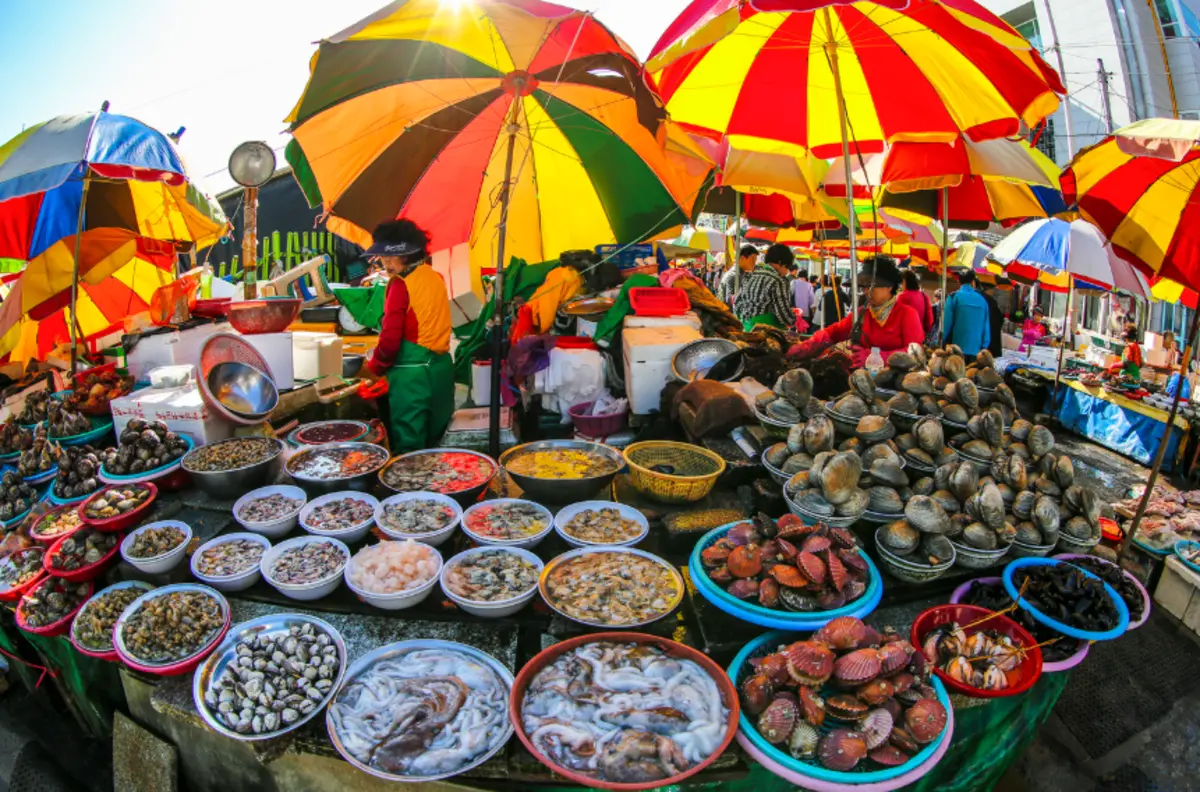
Jagalchi Market. Photo: Busan Tourism Organization (KOGL Type 1)
Prices have drawn complaints here. In September 2025, a customer posted that a raw-fish restaurant near Jagalchi charged ₩70,000 for a plate of sea cucumber listed only as “market price” (시가). The local district office inspected the restaurant, found missing price displays and issued a corrective order, according to Hankook Ilbo. That was one restaurant, not the whole market. Here is how I’d handle it:
- Skip street stalls that show no price, or only “market price” (시가).
- If you do order, ask “How much for this plate, exactly?” and write the number down.
- For a calmer sit-down meal, try the Sindong-a Market raw fish center (Jagalchi-ro 42). It is a short walk from Jagalchi Station, Exit 10. Pick your fish on the first floor, then eat upstairs.
- Expect roughly ₩50,000–90,000 for a mixed raw fish platter for three. Extras like live octopus, sea cucumber or abalone push it higher. A table fee may be added. Prices change with the day’s catch, so confirm the full price before you sit down.
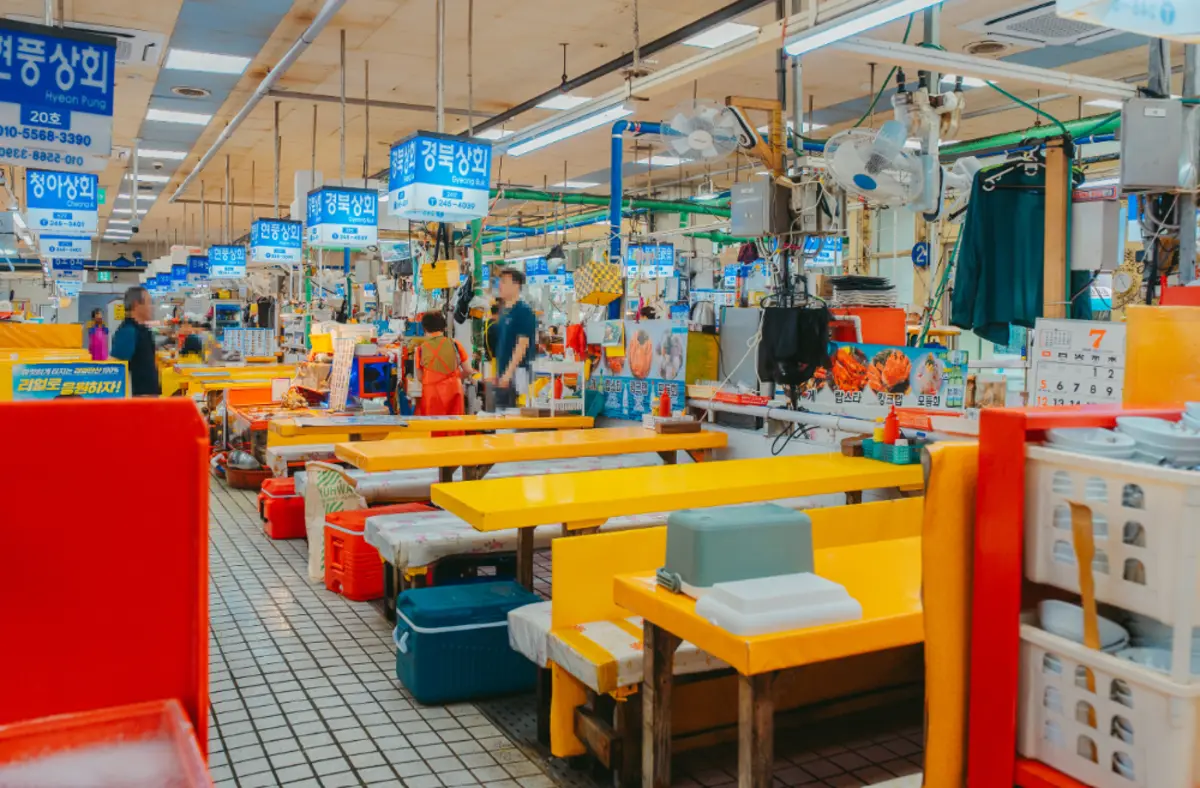
Sindong-a Market. Photo: Busan Tourism Organization (KOGL Type 1)
Warning: Never agree to a price you did not hear clearly. Ask them to show the number on a phone or a calculator.
Dinner on Day 1
Here is what I’d do: enjoy Jagalchi’s stalls with your eyes, then eat in Nampo-dong. Grab BIFF street snacks, and choose stalls with a posted price.
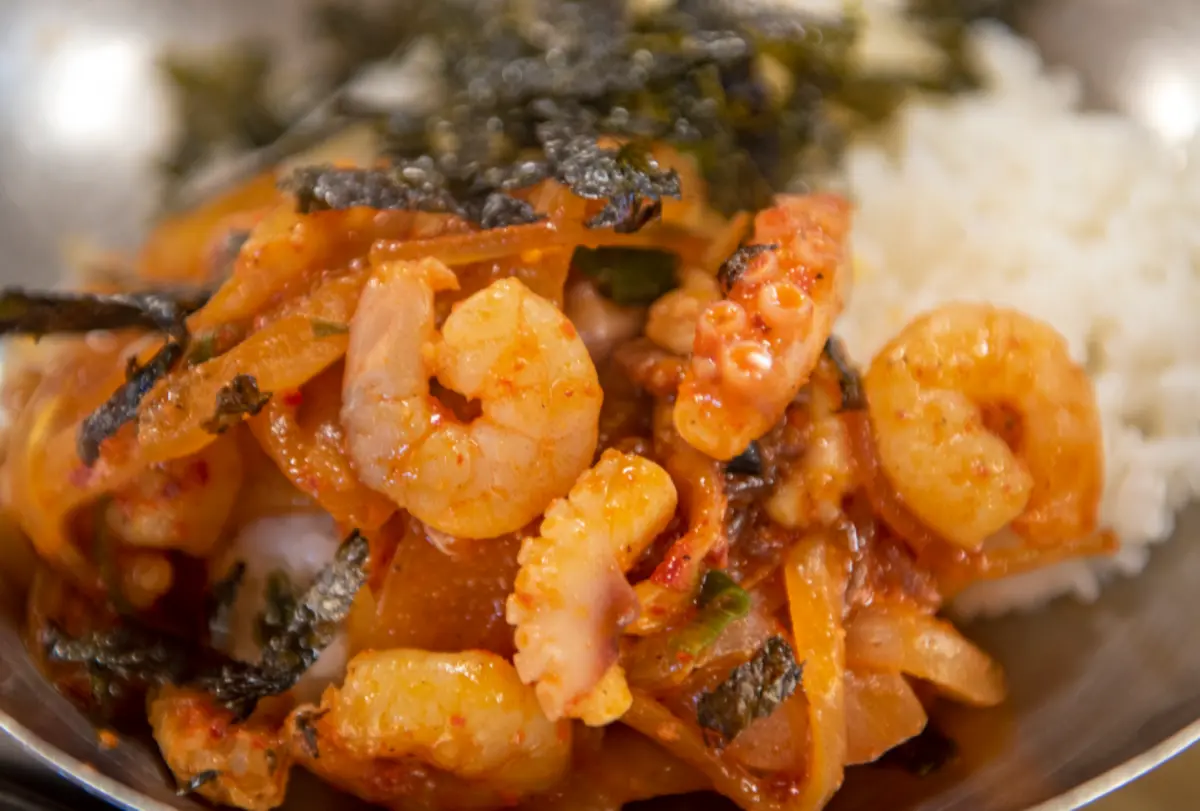
For a proper meal, I like nakgopsae, a spicy stir-fry of octopus, tripe and shrimp. I ate at Gaemijip (개미집), a chain with many branches across Busan. The taste is about the same at every branch.
Day 2: East Busan (Cheongsapo, Haeundae, Gwangalli)
Route: Cheongsapo (Dallitdol Skywalk and the Beach Train), then Haeundae Beach and market, then Gwangalli in the evening.
Cheongsapo and the Haeundae Beach Train
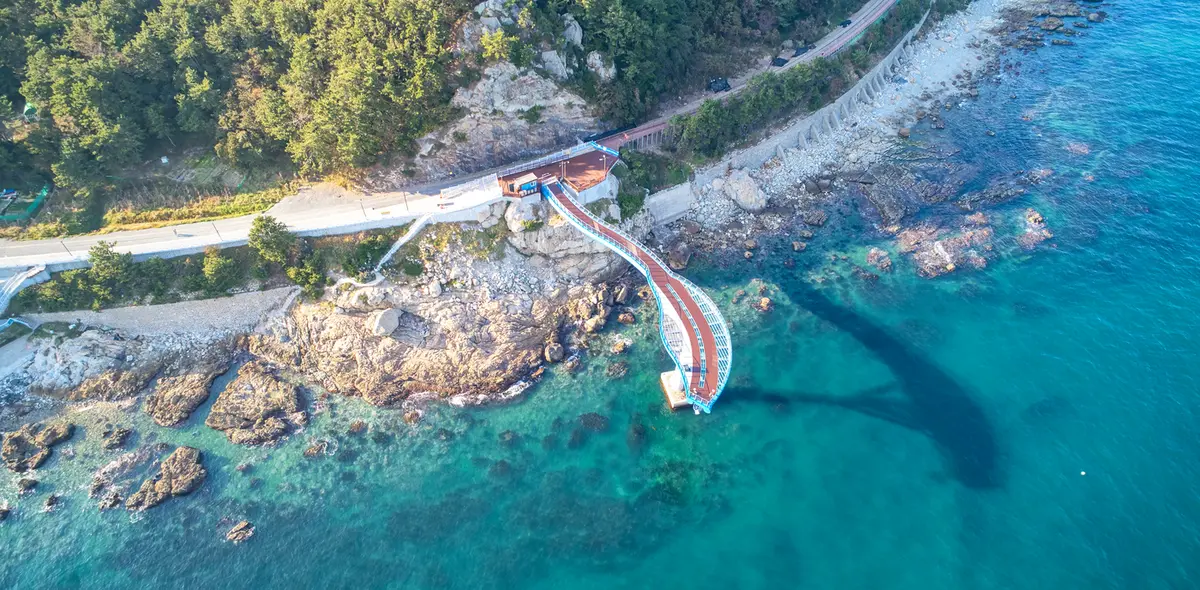
Cheongsapo Dallitdol Skywalk. Photo: Busan Tourism Organization (KOGL Type 1)
Take the Haeundae Beach Train along the coast. The ride is part of the sightseeing.
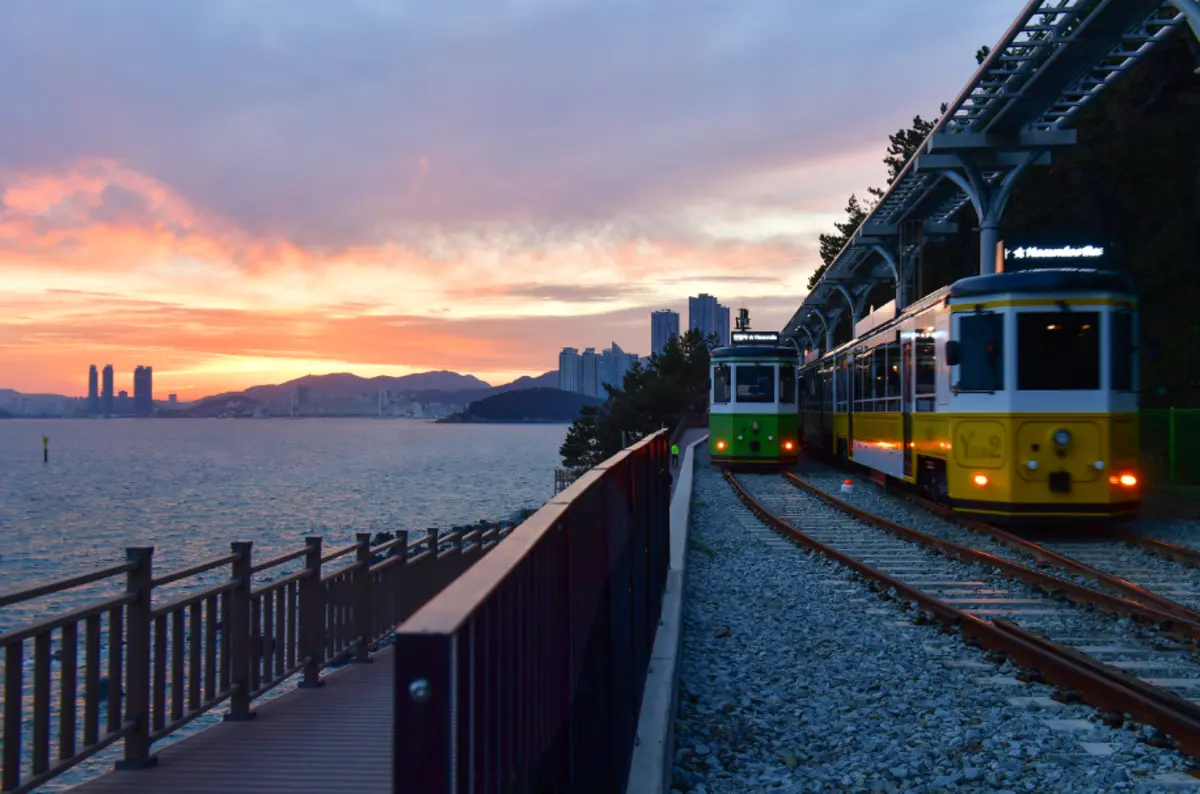
Haeundae Beach Train. Photo: Busan Tourism Organization (KOGL Type 1)
The line runs Mipo, then Cheongsapo, then Songjeong, about 25 minutes end to end. Mipo is at the east end of Haeundae Beach. The Sky Capsule is the other option on the same coast. It runs from Mipo to Cheongsapo in about 30 minutes, with no stops.
| Ride | Price (2026) |
|---|---|
| Beach Train, one ride from Mipo or Songjeong | ₩10,000 adult |
| Beach Train, one ride from Cheongsapo | ₩8,000 adult |
| Sky Capsule, one way | ₩50,000 per car (2 people) |
From November to February, the train runs 09:00–19:00 and the capsule runs 08:30–18:00. The first train ride is timed, so book ahead on busy days. Some overseas cards fail on the official site, so a Klook voucher for the Sky Capsule and Beach Train is an easy backup.
Haeundae Beach and Market
Walk the beach, then eat at Haeundae Market. This is why I recommend staying here. The sand is right outside your hotel, even in winter.
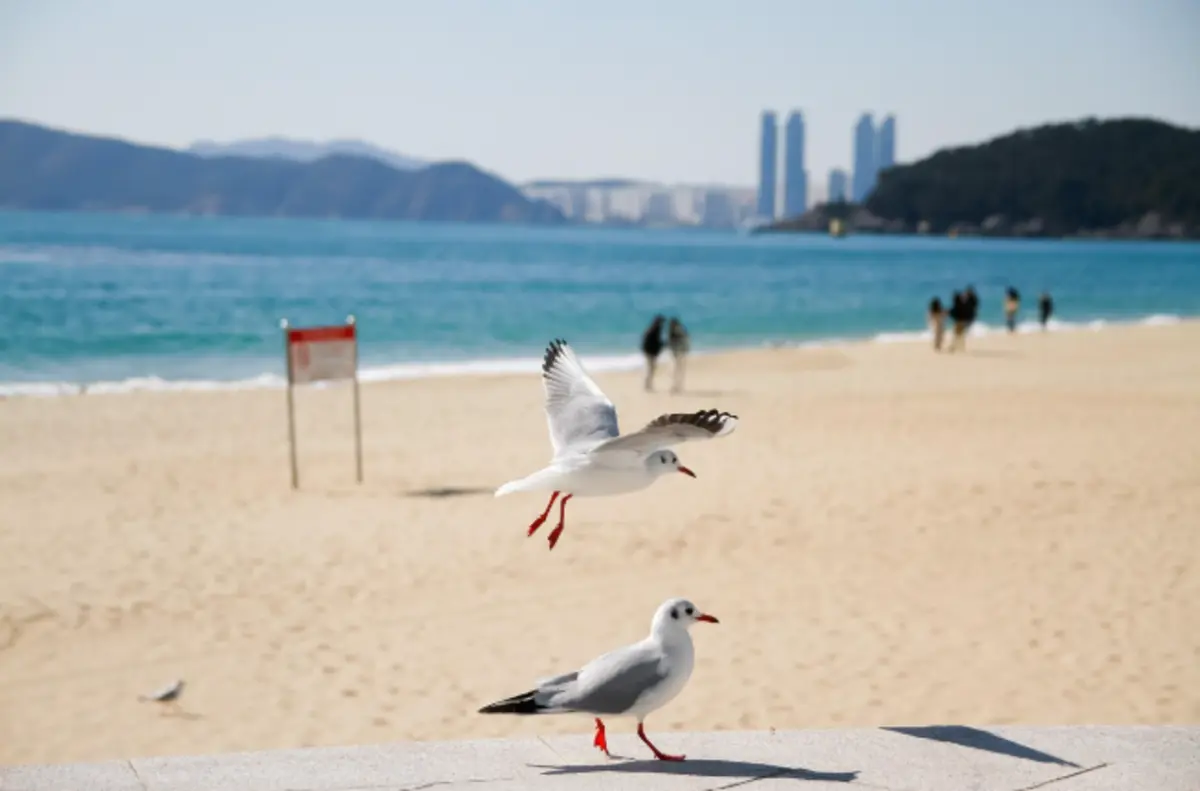
Gwangalli at Night
Gwangalli is best after dark. The lit Gwangan Bridge and the sea make the whole evening. Plan it as your last stop of the day.
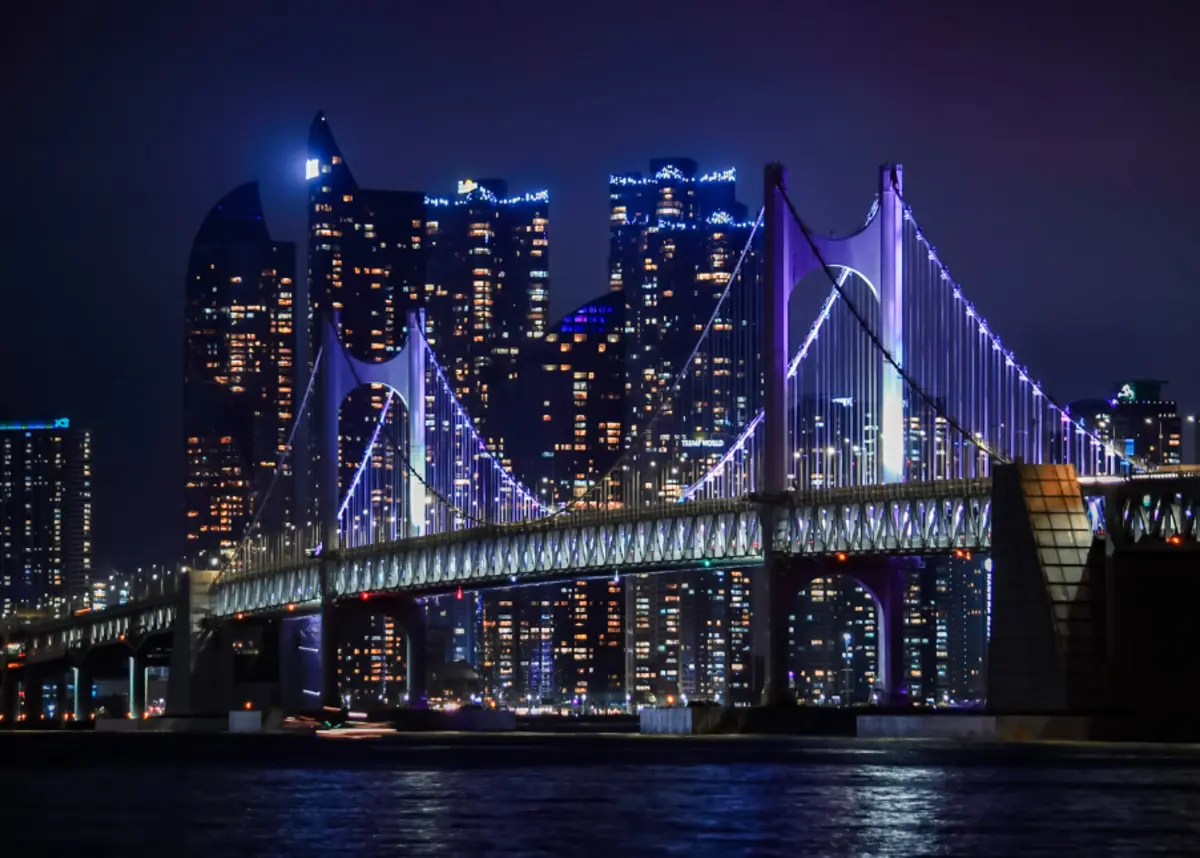
Gwangan Bridge at night. Photo: Busan Tourism Organization (KOGL Type 1)
Gwangalli’s drone light show runs on Saturdays only from October to February, at 7 PM and 9 PM. It is free and lasts about 12 minutes. Rain or strong wind can cancel it.
Pro-Tip: If your trip includes a Saturday, make it day 2. Check the schedule the week before you go, since the show changes by month.
Pro-Tip: If you buy raw fish near Minrak Waterside Park to eat at a nearby restaurant, ask about the table fee (chojang-gap) first. Check reviews before you sit down.
Day 3: Choose One
Option A: Haedong Yonggungsa
This sea temple is in Gijang, far east of Busan, and far from Busan Station and Gimhae Airport. Go early in the morning, then head back. If your train is in the afternoon, pick option B instead.
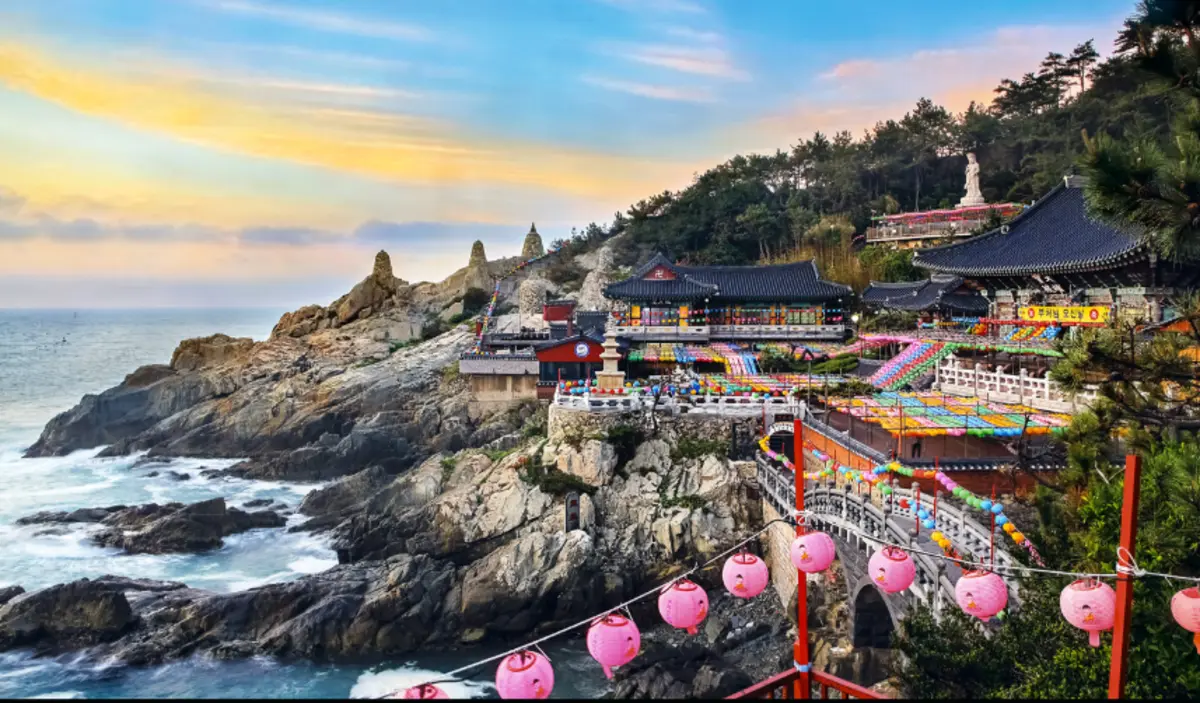
Haedong Yonggungsa. Photo: Busan Tourism Organization (KOGL Type 1)
Entry is free. It is open from 4:30 AM to 7:20 PM. Search for 해동용궁사 in Naver Map, since English searches can fail.
From Busan Station:
| Option | Time | Notes |
|---|---|---|
| Bus 1001 (express) | About 1 hour 20 minutes | Direct. Get off at “Yonggungsa·National Institute of Fisheries Science” (용궁사·국립수산과학원), then walk about 10 minutes. |
| Subway | About 1 hour 25 minutes | Via Seomyeon and BEXCO stations, then the Donghae Line to Osiria Station. |
| Taxi | About 30–40 minutes | Around ₩30,000. The fastest, but the priciest. |
From Haeundae Station (Line 2, Exit 7), you can also take bus 181. It takes 40–50 minutes.
Option B: Jeonpo Cafe Street and Oryukdo Skywalk
Spend the morning at the cafes in Jeonpo. Then see the sea at Oryukdo Skywalk, which is fairly close to Busan Station. Then head home.
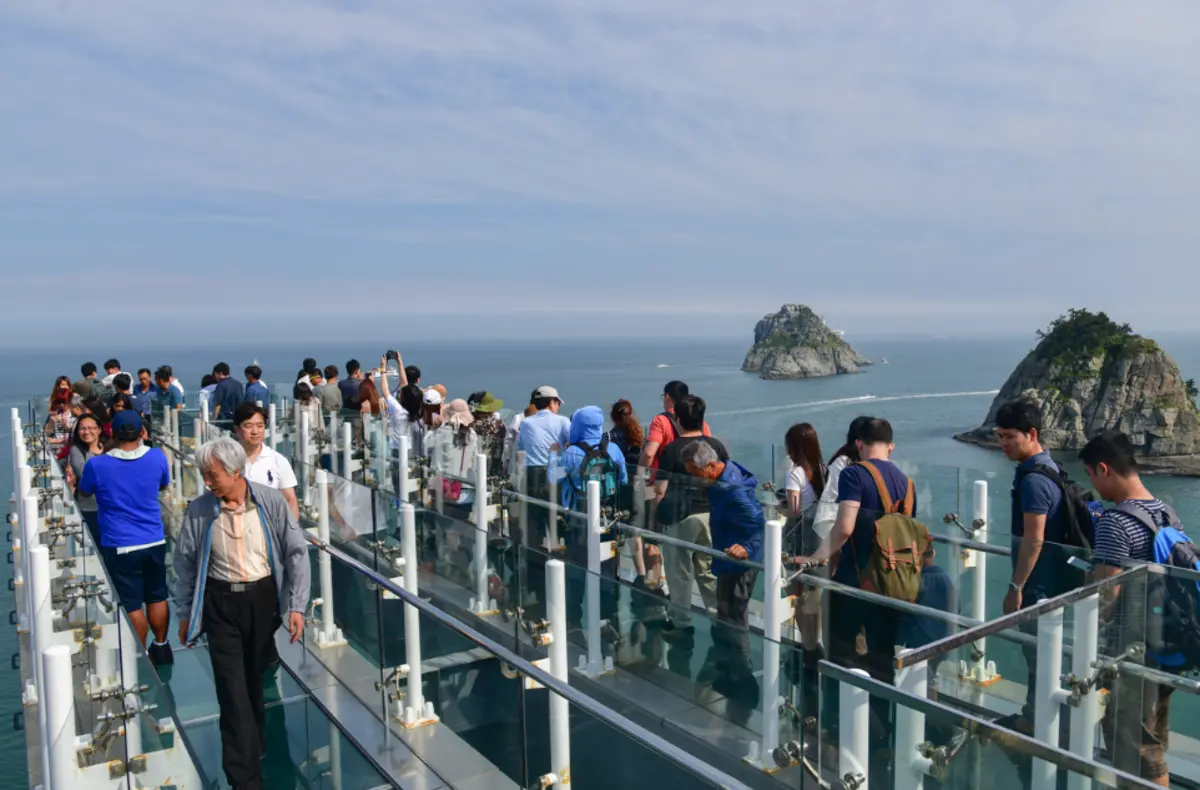
Oryukdo Skywalk. Photo: Busan Tourism Organization (KOGL Type 1)
The skywalk is free and open from 9 AM to 6 PM. From Busan Station, bus 27 goes straight there.
What to Eat in Busan
| Dish | What it is | Where |
|---|---|---|
| Dwaeji gukbap | Pork and rice soup. Clean and rich. | Locals recommend Subyeon Choego Dwaeji Gukbap (수변최고돼지국밥) |
| Milmyeon | Cold wheat noodles. Sweet, sour and chewy. | Locals recommend Gaya Milmyeon (가야밀면) |
| Nakgopsae | Spicy octopus, tripe and shrimp | Gaemijip (I tried it) |
| Ssiat hotteok | Seed-stuffed sweet pancake | Street stalls at BIFF Square |
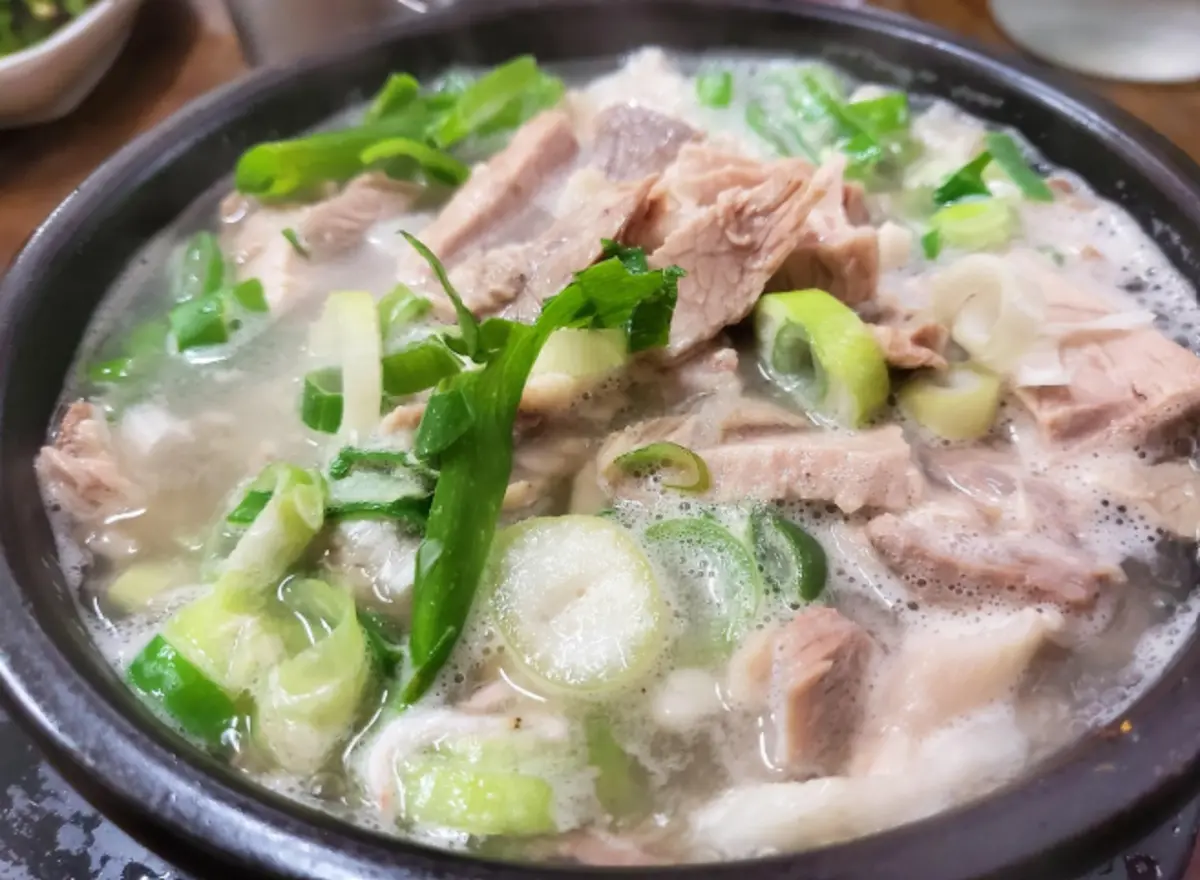
Dwaeji gukbap, a Busan staple
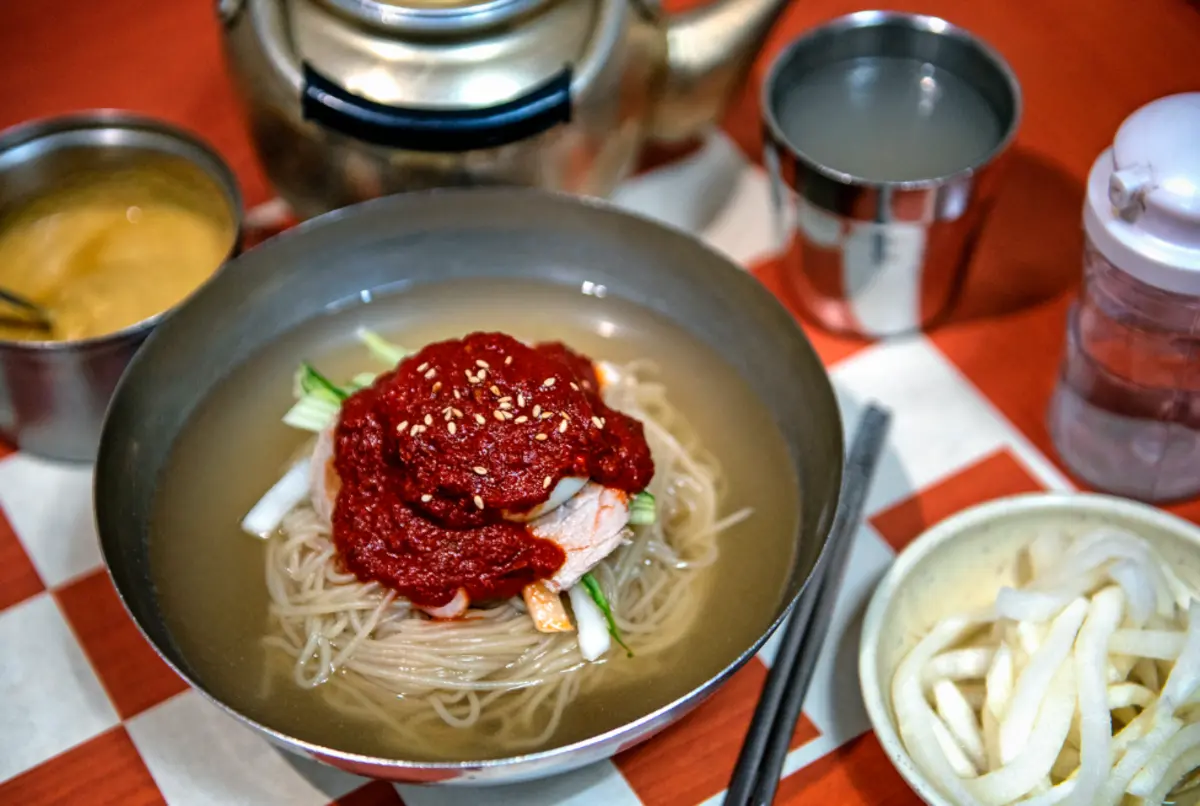
Milmyeon, Busan’s cold wheat noodles
Getting Around Busan
Your Seoul T-money card works on the Busan Metro. See my Seoul subway and T-money guide for how to top it up. You will also want data for Naver Map and Kakao T. A Korea eSIM on Klook is the easiest way to land with a working connection.
Pro-Tip: A Visit Busan Pass may or may not pay off. Add up your stops first. The 24-hour pass is ₩55,000 and the 48-hour pass is ₩85,000. You can pick up the card at the Busan KTX Station counter.
Common Mistakes
- Booking a hotel in Seomyeon, then wanting the beach every morning.
- Leaving Gamcheon for the end of day 1.
- Eating at a Jagalchi stall that shows no price.
- Planning Haedong Yonggungsa for the afternoon before your train home.
- Seeing Gwangalli in daylight only.
FAQ
How many days do you need in Busan?
Three days is enough for the main sights. Two days works if you skip day 3.
Is Busan worth visiting from Seoul?
Yes. It has beaches, seafood and a different feel from Seoul. The KTX takes about 2.5 hours.
Where should I stay in Busan?
Haeundae for the beach and views. Seomyeon for transit.
Is Jagalchi Market a rip-off?
Not always. Skip stalls with no posted price and ask for the exact price first.
Going to a Lotte Giants baseball game? I’ll cover that in a separate guide.
Disclosure: This post contains affiliate links. If you book through them, I may earn a small commission at no extra cost to you.
Planning a spring trip to Busan? You can also see the blossoms in Jinhae. My guide to Seoul cherry blossoms in 2027 explains how to fit it in.