


Quick Answer: A hanok stay means sleeping in a traditional Korean house, usually on a warm heated floor. In Seoul, I’d pick Ikseon-dong. If you have more time, Jeonju Hanok Village and Hwangnam-dong in Gyeongju are even better. One night is enough to get the full experience.
When friends ask me for one stay in Korea they’ll remember, my answer is always the same: book at least one night in a hanok. Hotels in Seoul are comfortable, but they could be anywhere in the world. A hanok could only be here.
This guide covers what a hanok stay is actually like, the three places I recommend, and what to check before you book so the first night goes smoothly.
What Is a Hanok Stay?
A hanok is a traditional Korean house with a wooden frame, a curved tile roof, and paper-covered windows and doors. Many old hanok have been turned into small guesthouses, often with only a few rooms around a courtyard.
Most hanok stays are small and family-run. Rooms are simple. You usually sleep on the floor on a thick mattress, and a lot of places serve breakfast or tea. Prices vary widely, from simple guesthouse rooms to boutique stays that cost as much as a nice hotel.
Why a Hanok Night Is Worth It
1. It feels like stepping back in time
This is the part that surprises people most. You can turn off a street lined with high-rises, walk into a narrow alley, and suddenly you’re under curved tile roofs, smelling old wood, and looking out at a quiet courtyard. The city noise drops away within a few steps. There’s nothing like it back home.

Shoes off at the porch: a hanok stay at dusk.
2. You sleep low, on a warm floor
Most hanok rooms use ondol, Korea’s traditional heated floor. Instead of a bed, you sleep on a yo, a thick folding mattress, with a heavy blanket on top. The first reaction from American friends is usually “Wait, I sleep on the floor?” Then they wake up warm and rested and want to do it again. In winter especially, the warm floor is the best part of the stay.
3. It’s restful for all five senses
- Sight: Morning light comes in soft through changhoji, paper-covered windows.
- Sound: You can sit on the wooden porch (maru) and hear wind chimes and birds instead of traffic.
- Taste: Many hanok stays serve a Korean breakfast or traditional tea.
4. Old look, modern comfort
“Traditional” doesn’t mean roughing it. Many hanok stays keep the beams, roof, and paper doors, but have remodeled bathrooms, Wi-Fi, air conditioning, and hotel-style amenities. You get the old house without giving up a hot shower.
3 Places I Recommend for a Hanok Stay
| Area | Best for | Getting there | Keep in mind |
|---|---|---|---|
| Ikseon-dong, Seoul | A hanok night without leaving Seoul | 2-minute walk from Jongno 3-ga Station (Exit 6) | Busy in the daytime, narrow alleys |
| Jeonju Hanok Village | The biggest hanok neighborhood, great food | KTX from Seoul (about 1.5 to 2.25 hours), then a short taxi | Best as an overnight trip |
| Hwangnam-dong, Gyeongju | History lovers, quiet evenings | KTX to Singyeongju, then bus or taxi | Far from Seoul, plan 1–2 nights |
Ikseon-dong: My Pick in Seoul
Ikseon-dong is a small cluster of hanok alleys in Jongno, about a two-minute walk from Exit 6 of Jongno 3-ga Station. Its story is the most interesting of any hanok area in Seoul. Around 1930, Jeong Se-gwon, a real estate developer and independence activist, bought the land and built rows of small, modernized hanok (most under about 50 square meters) for ordinary Korean families, at a time when Japanese colonial housing was spreading through the city. That’s why the alleys feel so tight and cozy. Today they’re packed with cafes, small restaurants, and shops. You can walk to Changdeokgung Palace and Insadong.
The upside is location: you’re in a hanok, but the subway, palaces, and night food are right there. The downside is that it’s popular, so the alleys get crowded during the day. Ask your host how quiet the room is at night, and expect to carry your luggage down a narrow alley.
What about Bukchon? Bukchon Hanok Village is more famous, but part of it is now a “red zone” where tourists may only visit from 10 a.m. to 5 p.m. Guests staying there can still come and go, but may be asked why they’re there. For a first hanok night, I find Ikseon-dong easier.
Jeonju Hanok Village: The Full Experience
If you want to feel surrounded by hanok, not just stay in one, go to Jeonju. Jeonju Hanok Village has hundreds of traditional houses in one neighborhood, so the whole area feels like a hanok town. Jeonju is also known for bibimbap, and many visitors rent a hanbok and walk the village.
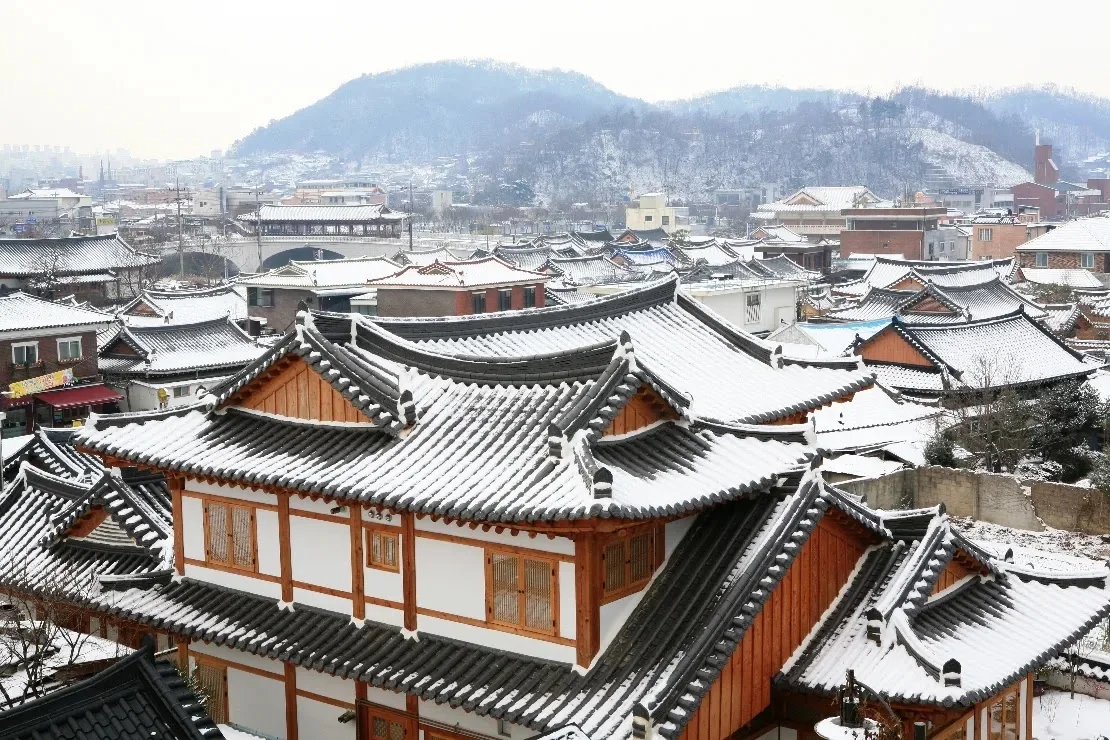
Jeonju Hanok Village after a winter snowfall. Photo: Seong Il-han via Korea Copyright Commission (gongu.copyright.or.kr), CC BY
Jeonju works best as an overnight trip from Seoul. The KTX takes about an hour and a half to two and a quarter hours, depending on the stops. Take the train, check in, walk the village in the evening when the day-trippers leave, and enjoy a quiet morning before heading back.
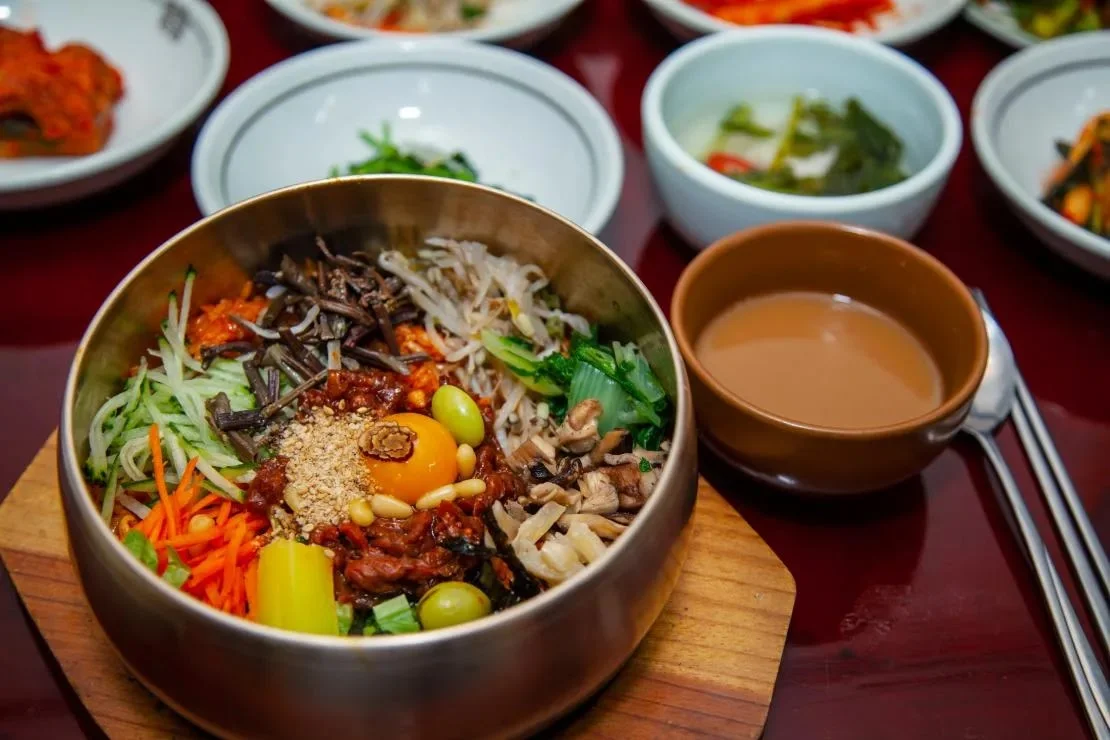
Jeonju bibimbap, the city’s signature dish. Photo: Park Dong-sik via Korea Copyright Commission (gongu.copyright.or.kr), CC BY
Hwangnam-dong, Gyeongju: History at Your Door
Gyeongju was the capital of the Silla kingdom for about a thousand years, and Hwangnam-dong puts you right next to it. The hanok stays here sit around Hwangnidan-gil, a street of cafes and restaurants, and the ancient royal tombs of Daereungwon are just steps away.
Evenings are the best part. After dinner, you can walk to the lit-up sights while it’s cool and quiet. Gyeongju is far enough that I recommend at least one night. I explain how to get there by KTX in my guide to day trips from Seoul.
The next morning, visit Bulguksa Temple, a UNESCO World Heritage Site a short bus or taxi ride away. It’s especially beautiful in autumn.

Bulguksa Temple in autumn, an easy morning trip from Hwangnam-dong.
What to Know Before Your First Hanok Night
- Shoes come off at the door. You’ll step up onto the wooden floor in socks. Bring slippers or comfortable socks.
- Watch your head. Door frames in old hanok can be low. Taller travelers, duck.
- You’ll sleep on the floor. If you want a softer bed, ask the host for an extra yo. Some hanok stays also offer rooms with a regular bed. Check the listing.
- Ondol can get hot. In winter, the floor can be warmer than you expect. Ask how to adjust the temperature.
- Walls are thin. Paper doors don’t block sound well. Bring earplugs if you’re a light sleeper, and keep your voice down at night.
- Check the bathroom type. Most rooms have a private bathroom now, but some cheaper rooms share one. Look for “private bathroom” in the listing.
- Ask about check-in. Many hanok stays are small with no 24-hour front desk. Tell the host your arrival time.
- Pack light. Alleys are narrow and some have steps. A smaller suitcase makes life easier.
Pro-Tip: You don’t need to spend your whole trip in a hanok. Book one night in a hanok and the rest in a regular hotel. You get the experience without giving up a full-size bed for the whole trip.
Is a Hanok Stay Right for You?
- Great for: First-time visitors who want a memorable night, couples, and anyone who loves history, architecture, or quiet mornings.
- Maybe skip it if: You have back or knee problems and can’t sleep on the floor (unless you find a room with a bed), or you’re traveling with lots of luggage.
Not sure which part of Seoul to stay in for the rest of your trip? See my guide to where to stay in Seoul. And if you’re building your days around palaces and hanok alleys, my 5-day Seoul itinerary puts Jongno on the right day.
FAQ
Do you sleep on the floor in a hanok?
Usually, yes. Most hanok rooms have a thick folding mattress called a yo on a heated ondol floor. Some hanok stays also have rooms with regular beds, so check the listing if you need one.
Where is the best hanok stay in Seoul?
For a first hanok night, I recommend Ikseon-dong. It’s a two-minute walk from Jongno 3-ga Station, close to Changdeokgung Palace and Insadong, and not under Bukchon’s tourist hour limits.
Is Jeonju or Gyeongju better for a hanok stay?
Jeonju is better if you want a whole neighborhood of hanok and great food. Gyeongju is better if you want ancient history, with royal tombs right next to the hanok stays. Both are worth at least one night.
About the author
I’m Seon, born and raised in Seoul. I write the guides I wish my foreign friends had before they landed, using the same apps I use every day: Naver Map, Kakao T, and a T-money card. More about me.
Update log: Oct 15, 2026: first published.